





Moissanite
What is a moissanite?
Moissanite is a gemstone discovered by chance in 1893. The French scientist Henri Moissan, who later won the Nobel Prize in Chemistry, found microscopic particles in a meteorite crater. Initially, he believed he had discovered diamonds, but a few years later, he determined that the crystals he had found were of a different composition. The gemstone, later named moissanite after him, shares similarities with diamonds. However, unlike diamonds, which are made of compressed carbon, moissanite is composed of silicon carbide. Natural moissanite is extremely rare, which is why almost all moissanites today are lab-created.
Quick facts: Moissanite vs. diamond
HARDNESS
Moissanite
Gemstone hardness is measured using the Mohs scale, which indicates scratch resistance. Moissanite scores 9.25, a high rating, meaning it is durable and robust. However, it’s worth noting that diamonds, rated 10 on the scale, are nearly four times harder than moissanite. While moissanite is suitable for daily wear and makes an excellent choice for engagement rings, it requires extra care compared to diamonds, the hardest mineral known.
Diamonds
Diamonds are the hardest known mineral, rated 10 on the Mohs scale. This incredible durability makes them ideal for daily wear. While the difference between 9.25 and 10 on the scale may seem small, diamonds are nearly four times harder than moissanites.
BRILLIANCE
Moissanite
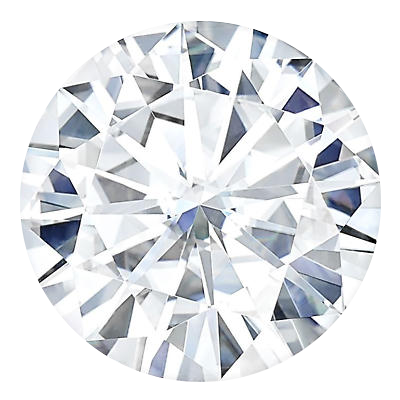
Diamonds and moissanites differ in appearance when placed side by side due to variations in their faceting patterns. Moissanites often exhibit a rainbow-like effect, sometimes referred to as a “disco ball” effect, particularly in sunlight. This characteristic can make moissanites appear overly lively, whereas diamonds are known for their clean, understated brilliance, offering a more refined and exclusive impression. som har et renere og mer eksklusivt inntrykk.
Diamonds
Diamonds tend to have a cleaner and more classic brilliance compared to moissanites. While moissanites can reflect an abundance of colors that some might find excessive or artificial, diamonds maintain a more natural and sophisticated sparkle. For this reason, diamonds are often considered the more timeless choice.
COLOR
Moissanite
Even when graded as colorless, moissanites can sometimes exhibit subtle hues, such as yellow or gray, under certain lighting conditions. However, in most settings, they appear predominantly colorless. The moissanites we offer are graded as near-colorless.
Diamonds
A diamond graded as colorless has no traces of other hues, making it appear cooler and more pristine than moissanites, which can sometimes show subtle color variations. This characteristic enhances the diamond’s appeal.
PRICE
Moissanite
Price is often a decisive factor when choosing between a diamond and a moissanite. Moissanites are significantly more affordable than diamonds. Additionally, pricing moissanites is simpler since they are lab-created and lack the many quality factors that diamonds possess, which can cause price variations.
Diamonds
Diamonds, whether natural or lab-grown, are generally more expensive than moissanites. This is due to the numerous factors that determine a diamond’s value, such as shape, carat weight, cut quality, color, and clarity. Lab-grown diamonds are also more challenging to produce than moissanites. For natural diamonds, their higher price reflects the unique, natural process that creates them, making them unmatched by lab-created stones or other gemstones like moissanites.