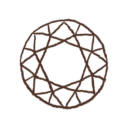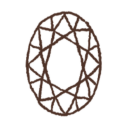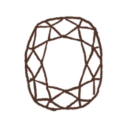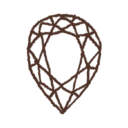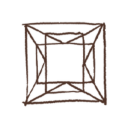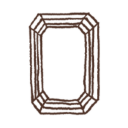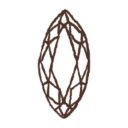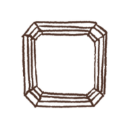


Diamond shapes
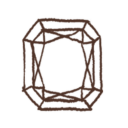
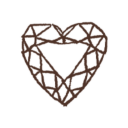
In the quest for the perfect diamond, the choice of cut becomes an exciting journey where aesthetics and precision converge. Selecting the diamond shape is the first decision to be made as it determines the appearance but also influences both the setting and the 4Cs. Classic round, romantically heart-shaped, or timeless oval? Explore the various diamond cuts and find the one that best suits your purpose.
From rough diamond to refined elegance
Before the diamond takes its form, known as "rough", the uncut stone looks like two pyramids stacked with their bottoms against each other. Typically, these "pyramids" are cut apart, resulting in two rough stones. These stones are carefully analyzed and measured by a diamond cutter. The goal is to maximize the size of the cut diamond without wasting excess material, much like planning where to cut a shape on paper without wasting paper. Diamond cutters often utilize modern technology, such as 3D imaging, to sketch and visualize different approaches in the rough diamond.
A demanding history
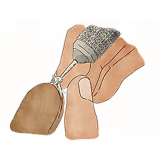
Before modern technology existed, diamond cutting was extremely demanding. The early cutting process typically involved placing a diamond on a rotating disc, often a smooth plate of iron or copper, which was attached to a water-powered mechanism. The diamond cutter then used another diamond as a cutting tool to gradually shape and polish the diamond by rubbing the two stones against each other. The process required great skill and experience to achieve the desired shape and brilliance. During this time, simpler cuts like the round brilliant cut were primarily used, although other simpler cuts were also employed. It wasn't until later, during the 15th and 16th centuries, that more complex cuts began to be developed and used.
Did you know…
When rough diamonds are cut, the result often resembles the princess diamond shape, hence the cutting is often lower in price per carat, as a larger portion of the rough diamond can be utilized, often up to 80%.
Rough diamonds with blunt corners are often, for example, cut into radiant or Asscher shapes, and some rough diamonds already have a shape that closely resembles the final form.
Round diamonds are often slightly more expensive per carat than other cuts. This is due to high demand combined with the fact that only a small portion of the rough diamond can actually be utilized, typically around 40%.
 (1) kopiera.jpg)
Popular shapes
Trends come and go, and this includes diamonds. Diamond shapes are often influenced by fashion trends. Since settings and styles are largely determined by the diamond's shape, one can clearly see how strong trends have affected demand. From Art Deco waves that elevate the emerald cut, to the princess cut of the 2000s, or today's minimalist delicate bands with oval diamonds. Our advice? Choose a shape that fits the wearer's style, today, tomorrow, and in 100 years - for trends come and go - but diamonds endure.
Approximate distribution of popularity: