







Diamonds
Step into the world of diamonds. Learn about the sparkling gemstone, its fascinating history, and receive our concierge's best advice.
Diamond History
Diamonds have been treasured for centuries, with the earliest known diamond mines in India dating back to around the 4th century BCE. They held significant cultural and religious importance in ancient civilizations, often symbolizing power, wealth, and purity. The diamond trade flourished during the Middle Ages, becoming highly coveted among European nobility. The discovery of diamond deposits in South Africa in the late 19th century transformed the industry, increasing production and global distribution.
The two kinds
Diamonds come in all shapes, colors, sizes, and purposes, but there are only two types of origin, natural or lab grown (man-made). The difference? None, except how the diamond came to life.
Natural diamonds
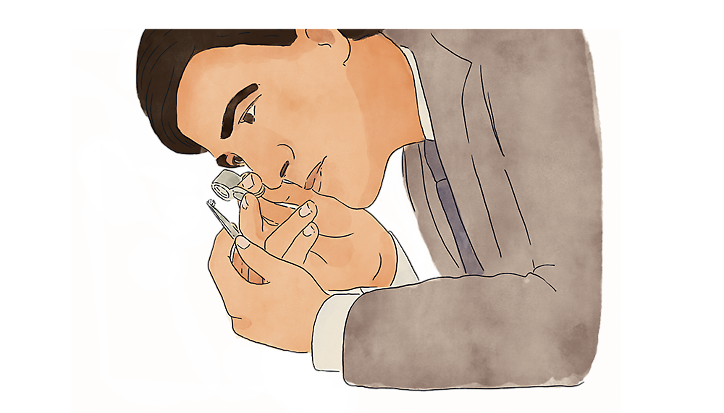
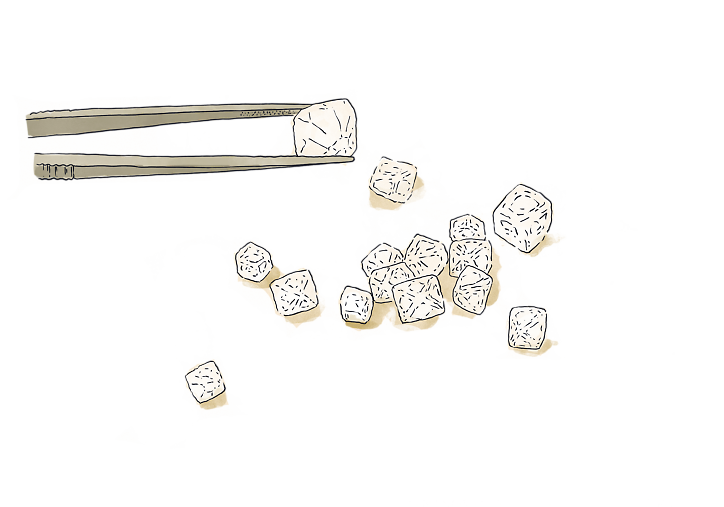
Diamonds are a mineral wholly made of carbon. The carbon atoms create a crystal system that makes the mineral transparent, and the structure of atoms creates a rigid and tolerable material. No other natural material on earth is as hard as a diamond, meaning only a diamond can scratch another. Diamonds are created approximately 160 km beneath the earth's surface in the mantle. Here, the temperature and pressure are perfect for a diamond to emerge. Diamonds are made when magma crystallizes and later travels with kimberlite through cracks in the earth’s surface. It takes millions of years for a diamond to be created, making the natural diamond a unique piece of a long and exciting history.
Lab grown diamonds
As the name reveals, a lab grown diamond is created in a laboratory. The manufacturing process itself requires advanced technology and renowned expertise. There are two different methods for creating a lab diamond: Chemical Vapor Deposition (CVD) and High Pressure High Temperature (HPHT). We offer diamonds produced through both processes.
CVD
The process begins when a gas, such as methane, is introduced to a vacuum chamber. The environment activates the gas, and its molecules are broken down using microwaves. This creates a reaction resulting in carbon atoms accumulating on a substrate, similar to snowflakes accumulating in a snowfall. The substrate holds a tiny grain of diamond, which collects the carbon atoms from the “snowfall” and grows into a diamond.
HPHT
During the HPHT process, a grain of carbon is exposed to a so-called High Pressure, High-Temperature technology. Due to the process's environment, the small grain can slowly turn into a diamond.
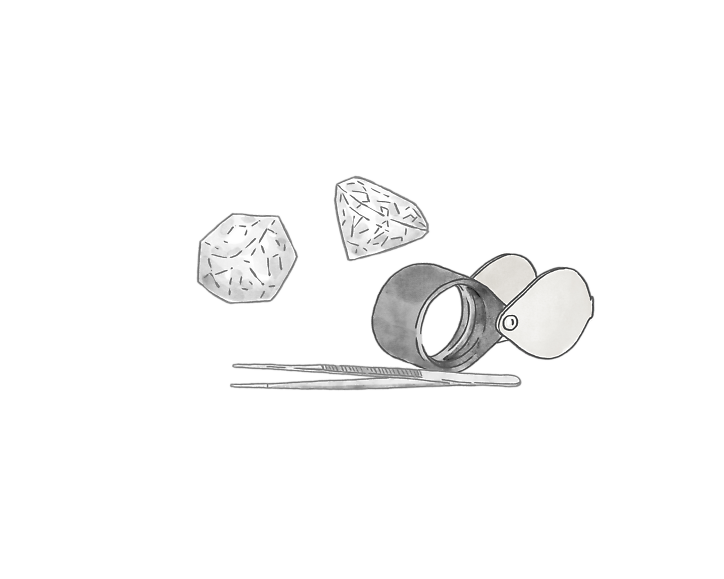
Lab grown or natural diamond?
The choice is yours. Find a diamond that suits your desires.
Lab grown diamond
Low second-hand value
Lower price (20-50%)
Made by humans
Modified after preferences
Possibility of unique colors and shapes
Real diamond
Natural diamond
Great investment
Higher price
Made by nature
Unique in its kind
Limited and costly for specific requests
Real diamond

Learn more about diamonds
The 4C's
A diamond is graded by four parameters called the 4C's. Together they determine the look and price of a diamond. Read on to learn more about the 4C's.

Cut
Determine how light is reflected. This is the most critical parameter to have in mind.


Clarity (klarhet)
Describes the absence or presence of imperfections, their position, size, and origin.